

 GLOBAL
 DACH
DACH
 FR-BE
FR-BE
The Gut-Brain Connection: How Plant-Powered Nutrition Supports Focus
Why what happens in your gut affects what happens in your mind — and the plant-powered nutritional approach behind Brainzyme®.*
📚 The Gut-Brain Axis Guide — No Hype, Just ScienceYour Gut and Your Brain Are in Constant Conversation
Most people think of the brain as the control centre and the gut as the processing plant. In reality, they’re in a two-way conversation — and the gut does more talking than most people realise.
Researchers call this the gut-brain axis: a bidirectional communication network linking the central nervous system and the enteric nervous system (the hundreds of millions of nerve cells lining your gastrointestinal tract).
The key insight: Roughly 90% of the body’s serotonin and significant amounts of GABA are produced in the gut, not the brain. Your focus, mood, and stress response all depend on gut-brain communication running smoothly.
When gut-brain communication is disrupted — by poor diet, stress, or microbiome imbalance — cognitive performance often follows. That mid-afternoon brain fog, the difficulty sustaining focus, the mental fatigue that follows a hard week: the gut-brain axis is frequently part of the story.
This guide explains the science in plain language and outlines how plant-powered nutritional support may help maintain gut-brain communication, supporting everyday focus and mood.*
0%
Of the body’s serotonin is produced in the gut
0M+
Nerve cells lining the gut — the “second brain”
0+
Medical professionals who trust Brainzyme®
0+
Verified customer reviews, 4.74/5 average
Sources: Mayer EA 2011 Nat Rev Neurosci; Gershon MD 1999 J Pediatr Gastroenterol; Carabotti M et al. 2015 Ann Gastroenterol; Brainzyme product records.
Do Any of These Sound Familiar?
The gut-brain axis shows up in day-to-day experience in subtle but recognisable ways. Tap any that resonate with you.
1
Focus comes and goes unpredictably
Some mornings you’re sharp. Others, the same tasks feel impossibly slow. No obvious reason. The gut-brain axis may be influencing this variability through neurotransmitter signalling rhythms.
2
Digestive discomfort correlates with low energy
You’ve noticed that when your gut feels off, your head feels foggy. This isn’t coincidence. The gut-brain axis communicates directly through the vagus nerve — gut distress sends signals upward.
3
Stress hits your gut before your head
You feel stress in your stomach first. Butterflies before a presentation. A tight gut during difficult conversations. The gut-brain axis runs in both directions — stress signals travel down as well as up.
4
Mood dips after poor eating
Diet changes that affect your gut microbiome also affect gut-based neurotransmitter production. The connection between diet, gut health, and mental state is increasingly well-supported by research.
5
Afternoon cognitive slump
A predictable window around 1–3 PM where focus drops, motivation fades, and the simplest tasks feel like hard work. Gut-brain signalling and blood sugar rhythm both contribute to this pattern.
6
You feel mentally flat despite sleeping enough
Good sleep but still foggy. This can point toward gut-brain signalling gaps — particularly if serotonin and dopamine precursor availability is suboptimal at the gut level.
0
of 6 signs selected
Important: Persistent gut symptoms, mood difficulties, or cognitive concerns should be discussed with a physician or licensed healthcare professional. This tool is for self-reflection only — not a diagnostic instrument. This page covers nutritional support, not medical advice.
What Is the Gut-Brain Axis?
The gut-brain axis is the bidirectional communication network between the gastrointestinal tract and the central nervous system. It operates through three main pathways:
🧠
The Vagus Nerve
The longest cranial nerve, running from the brainstem through the chest and into the abdomen. About 80-90% of vagus nerve fibres carry signals upward from gut to brain — making the gut a primary source of information, not just a receiver.
🪘
The Gut Microbiome
The community of 38 trillion+ microorganisms living in your gut. These microbes produce neuroactive substances including short-chain fatty acids, GABA, and serotonin precursors that communicate directly with the central nervous system.
🌿
Neurotransmitter Production
The gut produces approximately 90% of the body’s serotonin and contributes to GABA and dopamine precursor availability. These neurotransmitters regulate mood, motivation, stress response, and the ability to focus.
💪
The Immune – Brain Link
About 70% of the immune system is gut-associated. Gut inflammation can trigger systemic inflammatory signals that cross into the brain, affecting cognitive function and mood — a mechanism now widely studied in nutritional neuroscience.
The practical takeaway is that gut health and cognitive health are not separate systems. Supporting gut-brain communication through evidence-based nutritional ingredients is a scientifically grounded approach to everyday cognitive support.*
The Science: Prebiotics, Microbiome, and Cognitive Function
The microbiome-brain connection is one of the most actively researched areas in neuroscience. Dozens of peer-reviewed studies now link microbiome composition to cognitive performance, stress resilience, and mood regulation.
Here is what the current evidence shows about the key nutritional levers:
⚡
Gut-Derived Serotonin
Enterochromaffin cells in the gut lining produce ~90% of the body’s serotonin. While peripheral serotonin doesn’t cross the blood-brain barrier, it influences vagal tone and gut motility — which in turn affects brain state. Dietary tryptophan, the direct serotonin precursor, is absorbed in the gut and transported to the brain for central serotonin synthesis.
🌱
Prebiotic Dietary Fibre
Prebiotic fibres (fructooligosaccharides, inulin) selectively feed beneficial gut bacteria. A 2015 trial (Schmidt K et al., Psychopharmacology) found prebiotic supplementation significantly reduced cortisol awakening response compared to placebo — a direct gut-to-brain stress pathway effect.
🌿
Green Tea Polyphenols & L-Theanine
L-Theanine, the amino acid in green tea, modulates alpha brainwave activity associated with calm, alert focus. Separately, green tea catechins act as prebiotics — increasing beneficial Lactobacillus and Bifidobacterium populations. The gut-brain benefit works from both ends: microbiome support + direct BBB-crossing cognitive support.
💥
Dopamine & Tyrosine
Dopamine synthesis begins in the gut. L-Tyrosine (from the gut-absorbed amino acid pool) is the direct precursor to both dopamine and norepinephrine. Gut microbiome composition influences tyrosine availability — connecting microbiome health directly to the motivation and focus pathways that depend on dopamine signalling.*
Taken together, the evidence supports a nutritional strategy that addresses the gut-brain axis through multiple complementary pathways — not a single-molecule supplement.
Evidence: Peer-Reviewed Studies
Tap any topic to view the studies behind the claims on this page. All citations are independent peer-reviewed journals.
- The gut-brain axis: interactions between enteric microbiota, central and enteric nervous systems. Carabotti M et al. (2015). ncbi.nlm.nih.gov/pmc/articles/PMC4367209
- Gut feelings: the emerging biology of gut-brain communication. Mayer EA (2011). doi.org/10.1038/nrn2993
- The second brain: The enteric nervous system. Gershon MD (1999). doi.org/10.1016/s0022-3476(99)70299-9
- Gut microbiota features associated with Clostridioides difficile colonization in dairy cattle. Foster JA et al. (2013). doi.org/10.1038/nrn3346
- Diet, gut microbiota and cognition. Beilharz JE et al. (2016). doi.org/10.3390/nu8090572
- Microbiota and neurodevelopmental windows: implications for brain disorders. Borre YE et al. (2014). doi.org/10.1016/j.it.2014.05.010
- Investigating prebiotic effects on cognitive function and cortisol response: Schmidt K et al. (2015). doi.org/10.1007/s00213-014-3810-0
- Prebiotic intake reduces the waking cortisol response and alters emotional bias in healthy volunteers. Schmidt K et al. (2015). Psychopharmacology
- Gut microbiota and stress reactivity as predictors of cognitive performance. Simpson CA et al. (2021). doi.org/10.1038/s41598-021-83847-2
- L-Theanine and caffeine in combination affect human cognition as evidenced by oscillatory alpha-band activity. ncbi.nlm.nih.gov/pubmed/18641209
- L-Theanine reduces psychological and physiological stress responses. ncbi.nlm.nih.gov/pubmed/16930802
- L-Theanine, a natural constituent in tea, and its effect on mental state. ncbi.nlm.nih.gov/pubmed/18296328
- Tyrosine as a cognitive enhancer: Evidence from a double-blind, placebo-controlled study in healthy volunteers. Neri DF et al. (1995). doi.org/10.1016/0028-3932(94)00107-8
- The effects of tyrosine supplementation on cognitive performance and physical fatigue. Deijen JB et al. (1999). doi.org/10.1016/s0031-9384(99)00043-8
- Dopamine synthesis from gut-derived tyrosine: linking microbiome to neurotransmitter precursor pools. Review in Nutrients, 2021. doi.org/10.3390/nu13010196
All claims on this page are based on the studies listed above. Brainzyme® ingredients are validated by independent peer-reviewed research and manufactured to GMP-certified standards.*
How Brainzyme® Supports Gut-Brain Communication
Brainzyme® is not a probiotic. It is a plant-powered dietary supplement formulated with evidence-based nutrients that support the cognitive and neurological pathways influenced by gut-brain communication.*
The multi-pathway principle: No single ingredient addresses the full gut-brain axis. Brainzyme® combines plant extracts, amino acids, vitamins, and minerals that collectively support both the dopamine and GABA pathways that gut-brain signalling influences.*
Gut-Brain Support Timeline
Day 1 — Fast-acting ingredients
L-Theanine (from green tea) crosses the blood-brain barrier within ~30 minutes, supporting calm-alert focus. L-Tyrosine supports dopamine pathway availability from the first dose. Both are absorbed via the same gut pathways that the microbiome influences.*
Source: Nobre AC et al. 2008 Asia Pacific J Clin Nutr; Neri DF et al. 1995
Week 1 — Establishing rhythm
Consistent daily dosing aligns with gut-brain signalling rhythms. The same time each day helps stabilise the neurotransmitter precursor availability cycle. Most customers take their dose with breakfast.
Based on customer feedback patterns across 6,020+ verified reviews
Week 3 — Cofactors build
Magnesium, B-vitamins (B6, B12, Folate), and Vitamin C reach optimal tissue levels. These cofactors are essential for both dopamine and GABA synthesis pathways. At this stage, many customers report a more consistent baseline state of focus and calm.*
Source: Neurochem Res; Magnesium in the Central Nervous System 2011
Month 1 — Clear picture
By six weeks, you have a clear sense of whether the approach is working for you. The 365-day returns policy exists because everyone’s gut-brain chemistry is different. If it works, Subscribe & Save reduces the cost. If not, return it.
Based on Brainzyme® 365-day returns data
A Typical Day with Gut-Brain Support
Not a transformation story — just what happens, hour by hour, when your gut-brain axis has the nutritional building blocks it needs.*
8 AM
Morning dose
Two capsules with breakfast. No loading phase. Gut absorption of L-Theanine, L-Tyrosine, and B-vitamins begins immediately alongside your meal.
L-Theanine · L-Tyrosine · B6 · Magnesium absorbed
9–11 AM
Focus window opens
L-Theanine supports calm-alert focus. L-Tyrosine supports dopamine pathway availability for motivated, clear cognitive engagement. The gut-brain signal chain is in motion.*
L-Theanine + L-Tyrosine synergy
1–3 PM
Sustained afternoon
Sustained-release B-vitamins and Magnesium continue supporting neurotransmitter pathways. Many customers find the typical afternoon slump is less pronounced.*
B-vitamins · Magnesium · Sustained gut-brain support
Evening
Wears off naturally
No stimulant spike, no withdrawal, no reported next-day effects. Plant-based and non-habit-forming by design.
Plant-based, non-habit-formingDay-to-day vs long-term: L-Theanine and L-Tyrosine act from early doses. Magnesium and B-vitamins build longer-term support over the first few weeks. Effects vary — that’s what the 365-day money-back guarantee is for.*
What to Look for in a Gut-Brain Support Supplement
Not all supplements marketed around brain health address the gut-brain axis properly. Here’s what separates a thoughtfully formulated product from a single-ingredient capsule:
0/6 explored
-
✓Multi-pathway approach, not a single ingredient
Gut-brain communication operates through multiple neurotransmitter pathways simultaneously. A product supporting only one pathway (e.g., only L-Theanine or only Tyrosine) misses most of the mechanism.
-
✓Blood-brain-barrier-crossing compounds
The gut-brain benefit only completes when active compounds actually reach the brain. L-Theanine, L-Tyrosine, and B-vitamins are all well-established for BBB penetration. Always check that the active ingredients can reach the brain, not just the bloodstream.
-
✓Cofactors included, not just precursors
Neurotransmitter synthesis requires cofactors (B6, B12, Magnesium, Vitamin C) alongside precursors. Without cofactors, precursors can’t convert efficiently. A well-formulated product includes both.
-
✓GMP and HACCP manufacturing certification
Third-party manufacturing certifications mean consistent potency, purity, and safety. Self-declared quality claims without certification are not meaningful. Brainzyme® is manufactured in Scotland to GMP and HACCP standards.
-
✓No inflated claims
Any supplement claiming to “fix” gut health, “cure” brain fog, or “prevent” cognitive decline is overstepping the science. Legitimate dietary supplements support structure and function — they do not diagnose or treat any condition.
-
✓A meaningful returns guarantee
Individual biochemistry varies. A brand confident in its product backs it with a long returns window. A 14-day policy signals they expect a significant number of non-responders. Brainzyme® offers 365-day returns, no questions asked.
Choose Your Formula
Two formulas tuned to different sides of the gut-brain axis — motivation support (dopamine pathway) or stress-free focus support (GABA pathway). Both plant-powered. Both GMP certified. Trusted by 2,000+ medical professionals since 2016.
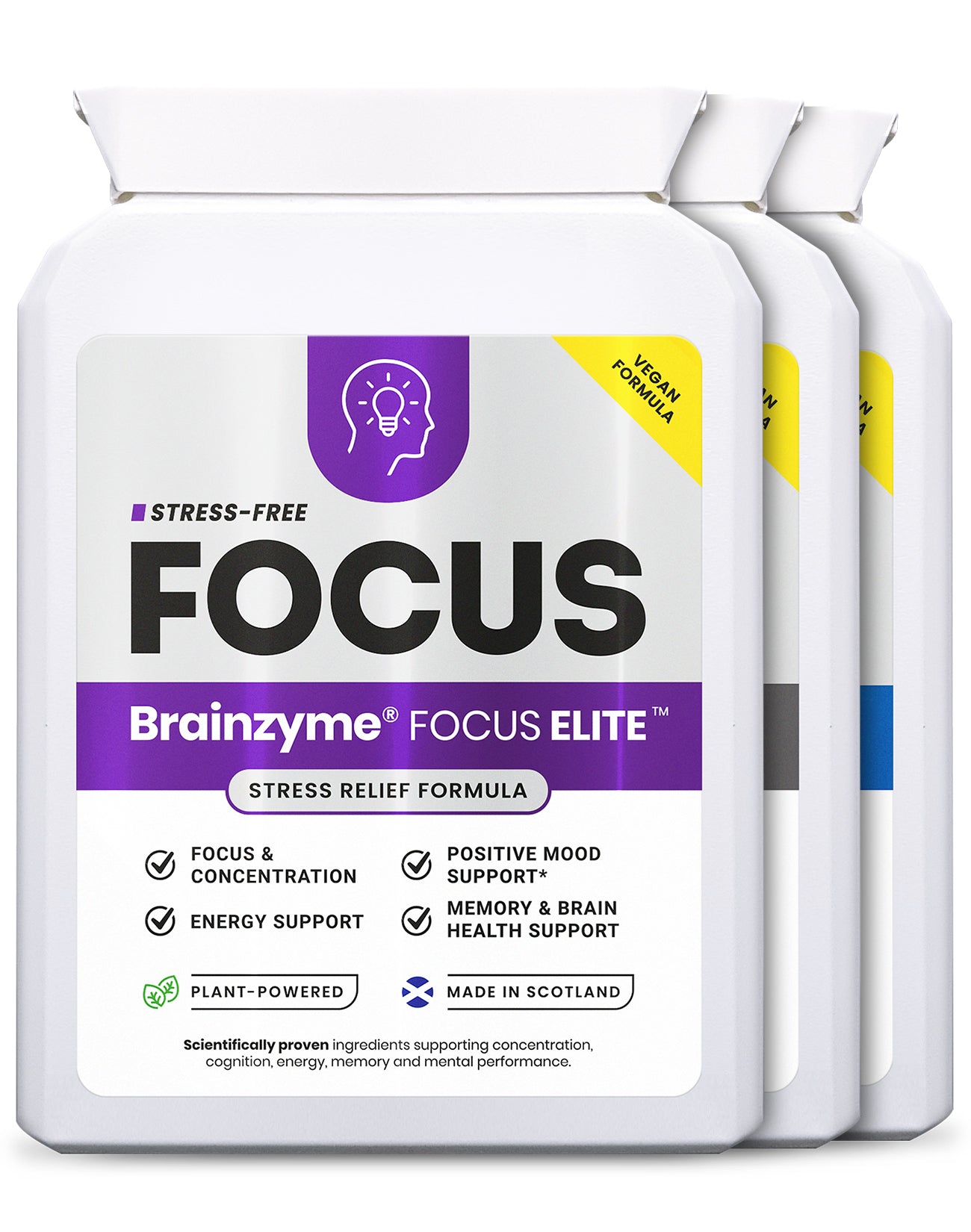
Best value — try all three
Starter Bundle
One of each formula (Original, Pro, Elite). Six weeks to find the formula that fits your gut-brain chemistry best.
$44
$53
You save $9 · Subscribe for $36.96
Try the Starter Bundle
GMP & HACCPMade in Scotland to pharma standards
Plant-poweredVegan, no synthetic fillers
From day 1No loading phase
365-day returnsFull refund, no questions
Free US deliveryOn every order
Real Customer Stories
Trusted by Medical Professionals










Plan Your Path
Three tools to help you decide if — and which — Brainzyme® is right for your gut-brain support goals.
What to expect over your first six weeks
Honest expectations from customer feedback — individual response varies. The 365-day return is there for that reason.
-
DAY 1
First dose — fast-acting ingredients
L-Theanine supports calm-alert focus within ~30 minutes. L-Tyrosine supports motivated, engaged cognition. Most people notice a clearer mental state from day one.*
-
WEEK 1
Settling into a rhythm
Daily consistency matters. Taking your dose at the same time with food optimises gut absorption and aligns with your body’s natural neurotransmitter production rhythms.
-
WEEK 3
The cofactors build in
Magnesium and B-vitamins reach optimal tissue levels. These support both dopamine and GABA synthesis cofactor requirements. Many customers report this is when the consistent baseline of focus and calm becomes more noticeable.*
-
WEEK 6
Stable baseline — decision time
Six weeks gives a fair picture. If it’s working, Subscribe & Save brings the cost down. If not, return it within 365 days — full refund, no questions asked.
Brainzyme® is a dietary supplement, not a medicine. Individual response varies. Not intended to diagnose, treat, cure or prevent any disease or condition.*
Lifestyle factors that support gut-brain communication
Supplementation works best alongside these evidence-based habits. They support the same gut-brain pathways through complementary mechanisms.
Fibre-rich diet
Dietary fibre feeds beneficial gut bacteria, which produce neurotransmitter precursors and short-chain fatty acids that communicate with the brain. Legumes, oats, vegetables, and fruit are the most accessible sources.
Consistent sleep
Sleep is when the gut microbiome undergoes its most significant repair and repopulation. Poor sleep disrupts microbiome composition within days, which in turn affects gut-derived neurotransmitter availability. 7–9 hours, consistent schedule.
Regular aerobic exercise
Exercise increases microbiome diversity and gut barrier integrity while simultaneously boosting dopamine and BDNF (brain-derived neurotrophic factor). Even 20–30 minutes of brisk walking three times a week makes a measurable difference.
Stress management
Chronic stress disrupts gut permeability and microbiome balance through cortisol signalling. Breath work, mindfulness, and deliberate recovery practices directly reduce cortisol and improve vagal tone — supporting the gut-brain axis from the top down.
Reduce processed food & excess sugar
Ultra-processed foods and excess sugar reduce microbiome diversity, increase gut inflammation, and disrupt short-chain fatty acid production. This isn’t about elimination — it’s about not making it the dominant pattern.
Three questions — we’ll suggest a formula
No data collected. The recommendation appears below the third answer.
1. What are you most hoping to support?
2. How would you describe a typical week?
3. Which gut-brain sign resonates most with you?
Frequently Asked Questions
No. Brainzyme® is a dietary supplement providing plant-powered brain nutrition. It is not a probiotic or prebiotic. It does not treat, diagnose, cure, or prevent any gut or brain condition. Its ingredients support cognitive function through nutritional pathways that include the neurotransmitter precursors and cofactors that gut-brain communication depends on.*
Both FOCUS PRO™ and FOCUS ELITE™ address gut-brain communication through different neurotransmitter pathways. FOCUS PRO™ emphasises motivation support through the dopamine pathway (L-Tyrosine + B-vitamins). FOCUS ELITE™ emphasises stress-free focus and positive mood support through the GABA pathway (L-Theanine, Ashwagandha, Magnesium). If your main challenge is stress and mental tension, ELITE is likely the better fit. If your main challenge is motivation and sustained drive, PRO is likely the better fit.
Brainzyme® is classified as a dietary supplement under US FDA regulations. All claims on this page are structure-function claims under 21 CFR §101.93. These statements describe the role of the product’s nutrients in supporting normal structure or function of the body — they do not claim to diagnose, treat, cure, or prevent any disease.
Most customers notice an effect from the first dose. L-Theanine crosses the blood-brain barrier within ~30 minutes, supporting calm-alert focus. L-Tyrosine supports dopamine pathway availability within 1–2 hours. Deeper cofactor support (Magnesium, B6, B12) builds over the first 2–3 weeks as tissue levels optimise.*
Brainzyme® comes with a 365-day money-back guarantee. Individual gut-brain chemistry varies. If you’re not satisfied for any reason within 365 days, return it for a full refund. No questions asked.
Brainzyme® is made by Better Nutritional Science Ltd, founded in Edinburgh, Scotland in 2016. All products are manufactured in Scotland to GMP and HACCP standards — the same standards used in pharmaceutical manufacturing. The company has 6,020+ verified customer reviews and the trust of 2,000+ medical professionals.
Important: Brainzyme® is a dietary supplement, not a medicine. It is not intended to diagnose, treat, cure, or prevent any disease or condition. Dietary supplements should not be used as a substitute for a varied, balanced diet and a healthy lifestyle. If you are pregnant, breastfeeding, taking medication, or under medical supervision, consult a healthcare professional before use. Do not exceed the recommended dose.
* These statements have not been evaluated by the Food and Drug Administration. This product is not intended to diagnose, treat, cure, or prevent any disease.
© 2026 Better Nutritional Science Ltd. Edinburgh, Scotland. All rights reserved.
Gut-brain science, no hype
Learn more