

 GLOBAL
 DACH
DACH
 FR-BE
FR-BE
The Dopamine Guide
Natural, evidence-based ways to support your focus, motivation, and mental drive.
📚 Honest Science — No Hype, Just Evidence
What Is Dopamine — And Why Does It Matter?
You've probably heard dopamine called the "feel-good chemical." That's only half the story.
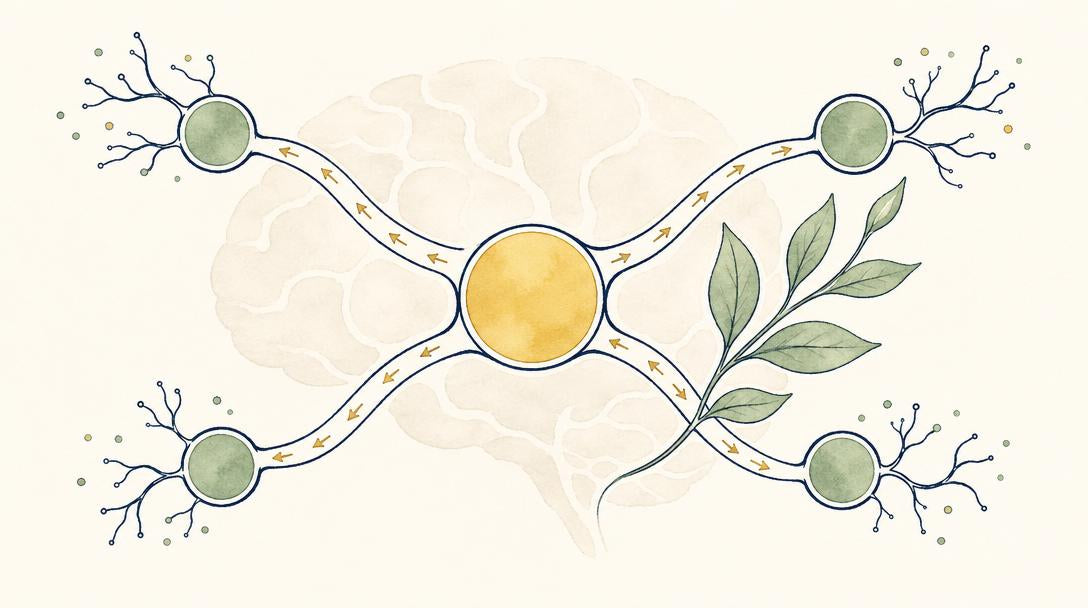
Dopamine is your brain's motivation molecule. It's the neurotransmitter behind the drive to start things, the focus to finish them, and the satisfaction you feel when you do.
Dopamine doesn't just make you feel good — it makes effort feel worthwhile. When dopamine pathways are well-supported, tasks feel approachable. When they're depleted, everything feels harder than it should: starting, focusing, following through.
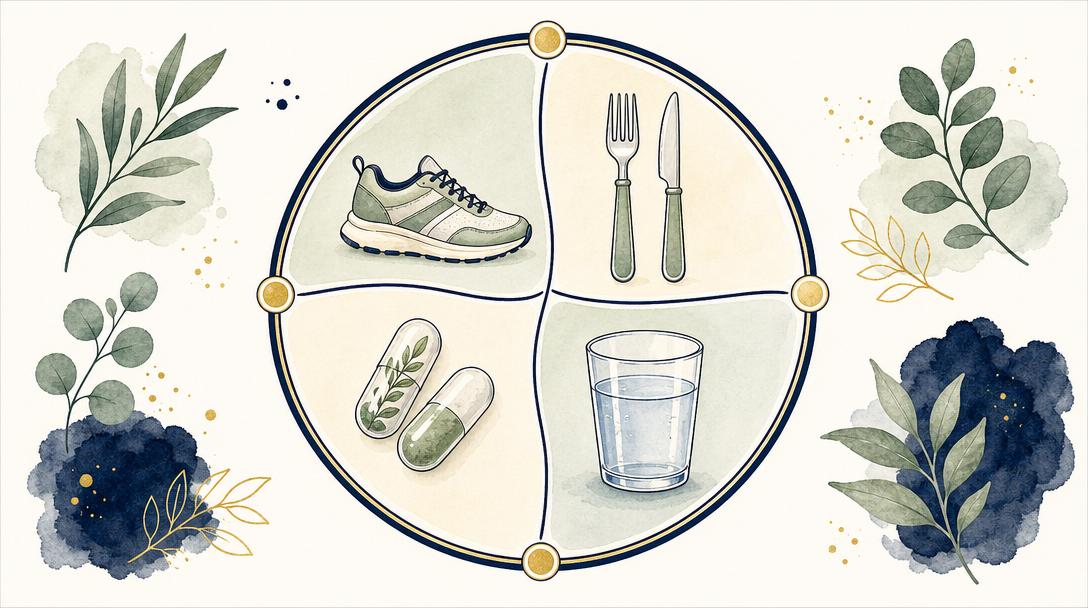
The good news is that dopamine production is directly influenced by factors you can control — diet, movement, sleep, and targeted nutritional support. This guide covers the science.
0%
Of people who changed diet reported improved mood and motivation in observational studies
0
Minutes of exercise is enough to measurably support dopamine activity for hours
0
Evidence-based lifestyle approaches to support dopamine naturally (all covered below)
0
Ingredients in FOCUS PRO™ supporting the dopamine pathway
Sources: Jacka et al. 2017 (SMILES trial), Meeusen & De Meirleir 1995, Brainzyme product specification
Do Any of These Sound Familiar?
Sometimes the signs of a dopamine pathway that needs support are obvious. Sometimes they're so gradual you don't notice until someone points them out. Tap any that resonate with you.
1
You can't seem to get started
The task is clear. The deadline is real. But you sit there, unable to begin. This isn't laziness — it's often a sign that your brain's motivation system needs support.
2
Focus feels like a fight
You used to concentrate for hours. Now, ten minutes in, your phone is in your hand. Sustained attention requires well-supported dopamine pathways.
3
The afternoon crash hits hard
By 2pm, your brain feels like it's wading through molasses. Mental energy drops. You rely on caffeine to push through — but the effect keeps getting shorter.
4
Procrastination has become your default
Not because you don't care, but because nothing feels urgent or rewarding enough to act on. The gap between knowing and doing keeps growing.
5
Brain fog won't clear
You know you're capable, but your thinking feels slow and cloudy. Words don't come easily. You re-read the same paragraph three times.
6
Motivation comes in waves
Some days you're unstoppable. Other days, you can barely get through your inbox. The inconsistency is more frustrating than the bad days.
0
of 6 signs selected
Important: Persistent focus or motivation difficulties should always be discussed with a physician or licensed healthcare professional. This tool is for self-reflection only — not a diagnostic instrument. This page covers nutritional and lifestyle support, not medical advice.
Where Nutritional Support Fits In
Dopamine plays a well-documented role in motivation, reward, and focus. This is not speculation — it's one of the most extensively studied neurotransmitter systems in neuroscience. And critically, dopamine production is directly influenced by the nutrients your body has available.
This guide is not about treating any condition. If you have clinical depression, attention disorders, or related conditions that affect motivation, those sit with qualified clinicians and appropriate medical treatment. Nothing here changes that.
What nutritional support can do is well-established: dopamine is synthesized from the amino acid L-Tyrosine, and that synthesis requires cofactors including Vitamin B6, B12, and Iron. When the diet consistently provides these building blocks, the dopamine pathway functions more effectively. When it doesn't, a well-formulated supplement fills the gap. That's basic neurochemistry — not a medical claim.*
The seven lifestyle strategies below work with this same science. Together, they give you a comprehensive approach to supporting the motivation and focus system — without overpromising.
How FOCUS PRO™ Supports Your Dopamine Pathways
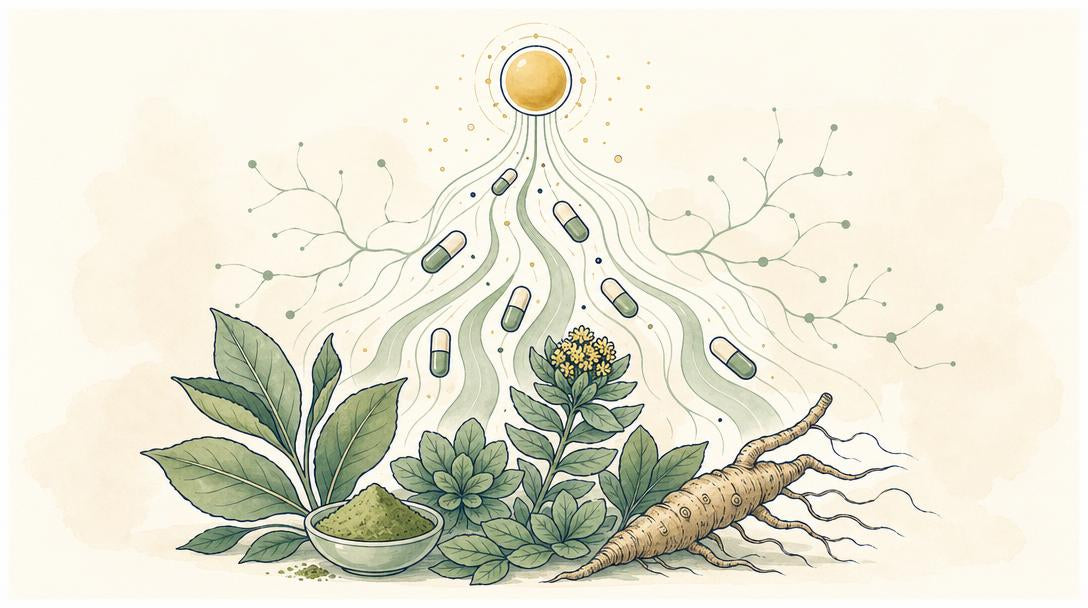
FOCUS PRO was built around the dopamine pathway — specifically, the nutritional building blocks your brain needs to produce and utilize dopamine effectively. Not a single ingredient — the full pathway.
🌿
L-Tyrosine
The direct amino acid precursor to dopamine. Your brain converts Tyrosine to L-DOPA, then to dopamine. Without adequate Tyrosine, this synthesis pathway is constrained at the source. Research shows L-Tyrosine may support working memory and cognitive performance under demanding conditions.
💪
Vitamin B6, B12 & Iron
These three nutrients are cofactors for the AADC enzyme that converts L-DOPA into dopamine. Without them, the conversion stalls regardless of how much Tyrosine is available. Iron deficiency — one of the most common globally — directly affects dopamine synthesis.
🌱
Matcha Green Tea
L-Theanine and natural plant-based stimulants in a balanced ratio that supports sustained alertness without jitters. L-Theanine also supports GABA pathways, providing a calm-focused underpinning to the motivational lift from the dopamine pathway ingredients.
💡
Ginkgo Biloba
Studied for its role in supporting cerebral blood flow, helping deliver nutrients and oxygen to the brain more effectively. Research suggests it may support memory and cognitive performance. Works alongside the dopamine-pathway ingredients rather than acting alone.
Most "dopamine supplements" are just Tyrosine in a capsule. That's one piece of the puzzle. FOCUS PRO provides the full pathway — the precursor, the cofactors, and the supporting compounds — in a single plant-powered formula.
Evidence: Peer-Reviewed Studies
Tap any ingredient to view the studies behind the claims on this page. All citations are independent peer-reviewed journals.
- Treatment with tyrosine, a neurotransmitter precursor, reduces environmental stress in humans. doi.org/10.1016/0361-9230(89)90096-8
- Working memory reloaded: tyrosine repletes updating in the N-back task. doi.org/10.3389/fnbeh.2013.00200
- The effects of tyrosine on cognitive performance during extended wakefulness. ncbi.nlm.nih.gov/pubmed/7794222
- Tyrosine improves working memory in a multitasking environment. doi.org/10.1016/S0091-3057(99)00094-5
- L-Theanine and caffeine in combination affect human cognition as evidenced by oscillatory alpha-band activity. ncbi.nlm.nih.gov/pubmed/18641209
- L-Theanine reduces psychological and physiological stress responses. ncbi.nlm.nih.gov/pubmed/16930802
- L-Theanine, a natural constituent in tea, and its effect on mental state. ncbi.nlm.nih.gov/pubmed/18296328
- The deployment of intersensory selective attention: high-density electrical mapping study of the effects of theanine. ncbi.nlm.nih.gov/pubmed/17272967
- Neuroprotective effects of Ginkgo biloba extract. doi.org/10.1007/s00018-003-3080-1
- Ginkgo biloba extract review on CNS effects. pubmed.ncbi.nlm.nih.gov/12938868
- Demonstration of the "anti-stress" activity of an extract of Ginkgo biloba using a discrimination learning task. doi.org/10.1016/0306-3623(94)90111-2
- Chemical analysis of Ginkgo biloba leaves and extracts. doi.org/10.1016/S0021-9673(02)00172-3
- Vitamin B6 supplementation reduces anxiety and increases the conversion of tryptophan to serotonin. doi.org/10.1016/j.humnut.2021.12.003
- The role of vitamins and minerals in energy metabolism and well-being. doi.org/10.1080/09637480601143169
- Nutritional importance of choline and B12 for brain development. doi.org/10.1080/07315724.2004.10719433
- Improved cognitive performance in human volunteers following administration of guarana extract. doi.org/10.1016/j.pbb.2004.07.014
- Guarana provides additional stimulation over caffeine alone in the planarian model. doi.org/10.1371/journal.pone.0123310
- Mechanisms involved in anti-aging effects of guarana. doi.org/10.1590/1414-431x20187552
- Iron deficiency and cognitive functions. doi.org/10.1016/j.nut.2011.03.001
- Brain iron and dopaminergic system — the link between iron deficiency and attention. ncbi.nlm.nih.gov/pmc/articles/PMC4377384
All claims on this page are based on the studies listed above. Brainzyme® ingredients are validated by independent peer-reviewed research and manufactured to GMP-certified standards.*
7 Evidence-Based Ways to Support Your Dopamine Naturally

These aren't life hacks — they're the foundations the dopamine pathway actually needs. Steps 1–6 build a baseline. Step 7 fills the nutritional gaps that lifestyle alone can't reliably cover.
Combining all 7 approaches works best. Supplementation without lifestyle change is less effective. Lifestyle change without adequate nutritional building blocks has a ceiling. Together, they're complementary.
1
Eat Tyrosine-Rich Foods
Tyrosine is the amino acid your brain uses to produce dopamine. Good sources include eggs, cheese, fish, turkey, chicken, soy, nuts, and bananas. A protein-rich breakfast sets the neurochemical foundation for the day.
2
Move Your Body — Even 20 Minutes
Even a brisk 20-minute walk can make a noticeable difference to focus and motivation for hours afterward. Exercise releases dopamine, serotonin, and BDNF simultaneously. Consistency matters more than intensity.
3
Prioritize Sleep Quality
Your brain restores dopamine receptor sensitivity during deep sleep. Aim for 7–9 hours. Keep the room cool and dark. Avoid screens for 30 minutes before bed. Chronic poor sleep directly depletes the dopamine system.
4
Get Morning Sunlight
10–15 minutes of outdoor light within the first hour of waking regulates your circadian rhythm and influences dopamine production throughout the day. Even overcast light is significantly better than indoor light alone.
5
Reduce Excessive Sugar & Processed Food
Highly processed foods trigger short, sharp dopamine spikes followed by crashes. Over time, this pattern desensitizes dopamine receptors, making normal rewards feel less satisfying. Building a foundation of whole foods protects the system.
6
Practice Mindful Focus
Resisting distraction and returning to a task strengthens the brain's dopamine-mediated focus circuits. Start small: 25 minutes of uninterrupted work. The ability to sustain focus is trainable, and the dopamine system responds to it.
7
Consider Targeted Nutritional Support
If your diet doesn't consistently provide enough Tyrosine and the cofactors required for dopamine synthesis (B vitamins, Iron, Magnesium), a well-formulated supplement fills the gap. FOCUS PRO was built specifically around the complete dopamine pathway — precursor, cofactors, and supporting compounds.*
A Typical Day on FOCUS PRO™

Not a transformation story — just what happens, hour by hour, when your brain has the dopamine building blocks it needs.
8 AM
Morning dose
Two capsules with breakfast. Tyrosine absorption begins alongside the Vitamin B6 and B12 cofactors that activate the dopamine synthesis pathway.
L-Tyrosine · B6 · Matcha absorbed
9–11 AM
Motivated morning window
Tasks feel less resistive to start. Matcha provides smooth, sustained alertness. The Tyrosine gives the dopamine pathway its raw material for the demands of the morning.
Tyrosine pathway + Matcha synergy
1–3 PM
Sustained afternoon
The dose lasts roughly 6–8 hours. Most people find the typical mid-afternoon motivation dip is reduced without needing a secondary hit of stimulants.
Steady energy metabolism
Evening
Wears off naturally
No buildup, no withdrawal, no reported next-day grogginess. Plant-based and non-habit-forming by design. The next day starts fresh.
Plant-based, non-habit-formingDay-to-day vs long-term: Matcha and Guarana act from the first dose. B-vitamins, Zinc, and Iron build longer-term dopamine pathway support over the first few weeks. Effects vary — that's what the 365-day money-back guarantee is for.
What to Look for in a Dopamine Support Supplement

If you're going to invest in dopamine pathway nutrition, here's what separates legitimate products from single-ingredient capsules with marketing-driven labels:
0/6 explored
-
✓Full-pathway formula, not just Tyrosine
Dopamine synthesis requires the precursor (Tyrosine) AND the cofactors (B6, B12, Iron). A single-ingredient Tyrosine capsule won't address the full mechanism. Look for the complete pathway.
-
✓Science-backed ingredients at transparent doses
Not proprietary blends that hide ingredient amounts. Every ingredient should be at a dose backed by published research, and you should be able to see exactly what you're getting.
-
✓GMP and HACCP certification
Manufacturing standards that guarantee consistency, purity, and safety. Third-party verified, not self-declared. Made in Scotland to pharma-grade standards.
-
✓No inflated claims
If it promises to "fix your dopamine" or "cure brain fog" — walk away. Legitimate brands support natural dopamine pathways. They don't claim to treat any condition or replace medical care.
-
✓A meaningful returns policy
Individual response to nutritional support varies. Any brand that genuinely believes in its product will back it with a long returns window. A 14-day policy suggests confidence issues.
-
✓Plant-powered, allergen-free, vegan-friendly
Clean formulation for daily use. Avoid unnecessary synthetic fillers, artificial colors, and common allergens. What isn't in the capsule matters as much as what is.
Choose Your Formula
Three plant-powered formulas, each tuned to a different kind of focus support. Trusted by 2,000+ medical professionals since 2016. Made in Scotland.

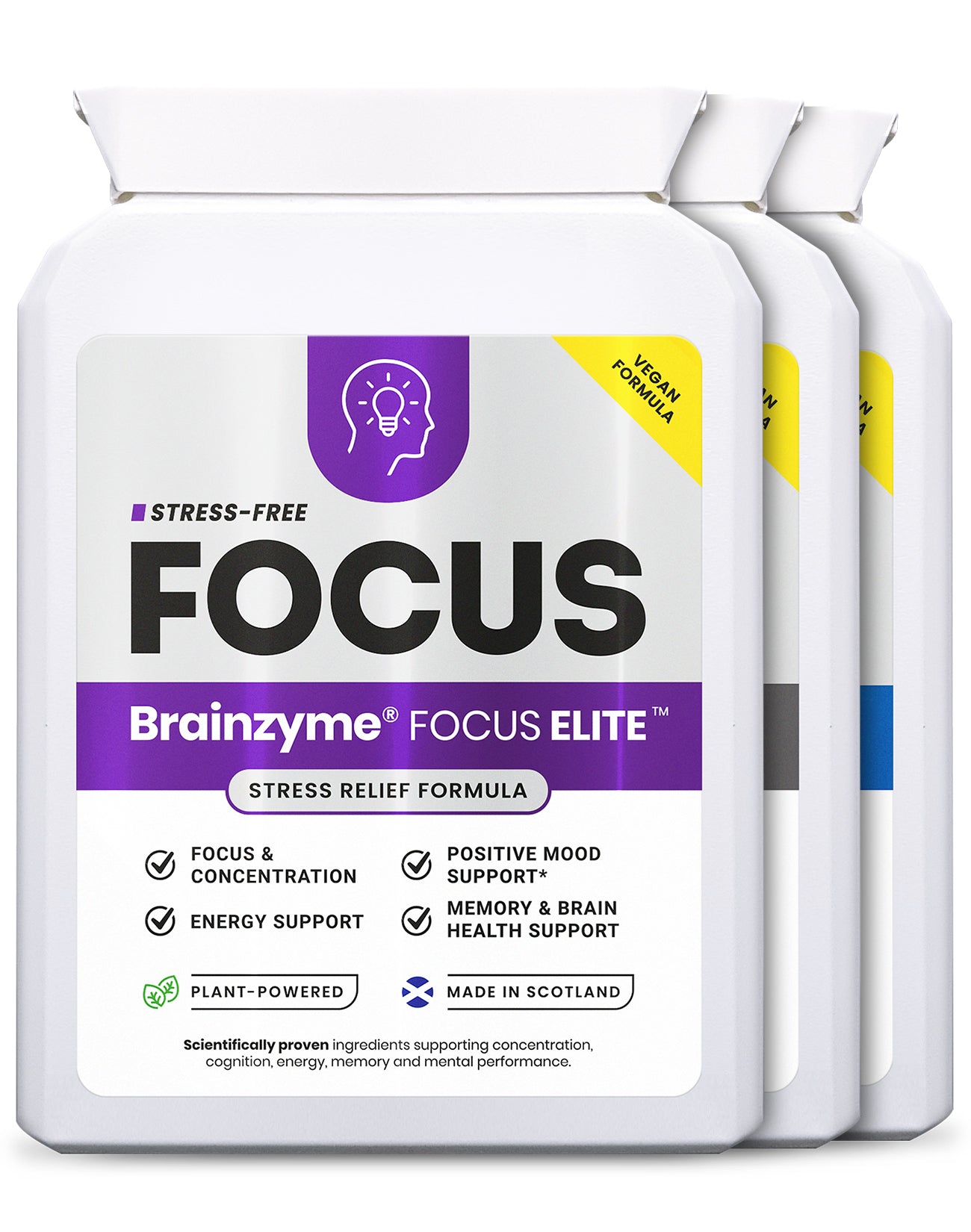
Best value — try all three
Starter Bundle
One of each formula (Original, Pro, Elite). Try them across six weeks and find the one that fits you best.
$44
$53
You save $9 · Subscribe for $36.96
Try the Starter Bundle
GMP & HACCPMade in Scotland to pharma standards
Plant-poweredVegan, no synthetic fillers
From day 1No loading phase
365-day returnsFull refund, no questions
Free US deliveryOn every order
Real Customer Stories
Trusted by Medical Professionals










Plan Your Path
Three tools to help you decide if — and which — Brainzyme® is right for your focus and motivation goals.
What to expect over your first six weeks
Honest expectations from customer feedback — some people feel more, some less. The 365-day return is there for that reason.
-
DAY 1
First dose — calm-alert lift
Most people notice a clearer, more motivated focus within an hour of the first two capsules. Matcha provides smooth alertness from dose one — no build-up phase needed.
-
WEEK 1
Settling into a rhythm
You find what time suits you (most take with breakfast). Getting started on tasks feels marginally less resistive. Afternoon energy is steadier than without.
-
WEEK 3
The deeper nutrients build in
B-vitamins, Iron, and Zinc reach optimal tissue levels. These are the cofactors that support dopamine synthesis. Many customers report this is when motivation feels more consistent — not just on dose days.
-
WEEK 6
Stable baseline — decision time
By six weeks you have a clear picture of whether it's working. If yes, Subscribe & Save drops the cost. If not, return within 365 days for a full refund — no questions asked.
Brainzyme® is a dietary supplement, not a medicine. Individual response varies. Not intended to diagnose, treat, cure or prevent any disease or condition.*
Lifestyle factors affecting dopamine day to day
How dopamine support shows up in daily habits. Each of these directly influences the same pathway that FOCUS PRO targets nutritionally.
Morning protein
Tyrosine (dopamine precursor) is highest in protein-rich foods. Eggs, Greek yogurt, fish, or legumes at breakfast sets the neurochemical tone. Skipping breakfast depletes the starting substrate.
Daily movement
Exercise acutely raises dopamine and also upregulates dopamine receptors over time. Even 20 minutes of brisk walking measurably changes focus and motivation for hours afterward.
Morning sunlight exposure
10–15 minutes of outdoor light within the first hour of waking sets the circadian clock, which directly modulates dopamine production throughout the day. This is free and requires no discipline once it's a habit.
Protecting sleep
Dopamine receptor sensitivity is restored during deep sleep. Chronic sleep restriction visibly reduces motivation and focus the following day. 7–9 hours, consistent wake time.
Task completion rituals
Dopamine is released on task completion. Breaking large projects into small, clearly completable sub-tasks creates more frequent dopamine signals — which builds motivational momentum rather than depleting it.
Three questions — we'll suggest a formula
No data collected. The recommendation appears below the third answer.
1. What are you most hoping to support?
2. How would you describe a typical week?
3. How experienced are you with focus supplements?
Frequently Asked Questions
No. Brainzyme® FOCUS PRO is a dietary supplement that supports natural dopamine pathways through a multi-ingredient nutritional approach. It is not a dopamine supplement, not a medicine, and does not treat, diagnose, cure, or prevent any condition. It provides plant-powered brain nutrition that may support normal cognitive function through evidence-based nutritional ingredients including L-Tyrosine and B-vitamins.*
FOCUS PRO contains L-Tyrosine (the amino acid precursor your brain uses to produce dopamine), alongside Vitamins B6 and B12 (cofactors for the AADC enzyme that converts L-DOPA into dopamine), Iron (required for dopamine synthesis), Matcha (L-Theanine for calm focus), and Ginkgo Biloba (studied for cerebral blood flow support). Together these address the full dopamine synthesis pathway, not just one ingredient.*
Brainzyme® is classified as a dietary supplement under US FDA regulations. We describe our products as plant-powered brain nutrition — real vitamins, minerals, and plant extracts formulated to support everyday cognitive function. This is not a medicine and does not treat any condition.*
Most customers report noticing a clearer, more motivated focus from day one. There is no build-up period. Matcha provides natural, sustained alertness from the first dose, while B-vitamins, Iron, and Zinc support longer-term cognitive function that builds over the first few weeks as these nutrients reach optimal tissue levels.
Brainzyme® comes with a 365-day money-back guarantee. If you're not satisfied for any reason, return it within 365 days for a full refund. No questions asked. We believe in the product and we want you to try it with full confidence — not a forced 30-day commitment.
Brainzyme® is made by Better Nutritional Science Ltd, founded in Edinburgh, Scotland in 2016. All products are manufactured in Scotland to GMP and HACCP standards. The company has been operating for over 9 years with 6,020+ verified customer reviews and the trust of 2,000+ medical professionals.
Important: Brainzyme® is a dietary supplement, not a medicine. It is not intended to diagnose, treat, cure, or prevent any disease or condition. It does not claim to treat or address any dopamine-related condition. Dietary supplements should not be used as a substitute for a varied, balanced diet and a healthy lifestyle. If you are pregnant, breastfeeding, taking medication, or under medical supervision, consult a healthcare professional before use. Do not exceed the recommended dose.
* These statements have not been evaluated by the Food and Drug Administration. This product is not intended to diagnose, treat, cure, or prevent any disease.
© 2026 Better Nutritional Science Ltd. Edinburgh, Scotland. All rights reserved.
Honest science, no hype
Learn more